
On the Record, Off the Hook: Darren Indyke Deposition
Darren Indyke spent 20 years as Jeffrey Epstein’s in-house attorney, co-signed his will, withdrew cash by the hundreds of thousands, and was never once interviewed by law enforcement.

The Depositon
On March 19, 2026, Darren Indyke sat before the House Oversight Committee for eight hours behind closed doors and said, under oath, that he had no knowledge whatsoever of Jeffrey Epstein’s crimes. Not a suspicion. Not a question. Nothing.
Indyke was not a peripheral figure. He was Epstein’s attorney for more than two decades, beginning around 1996. He handled corporate, transactional, and general legal matters. He was named co-executor of Epstein’s estate two days before Epstein died in a Manhattan jail cell. He was bequeathed $50 million in that same will.
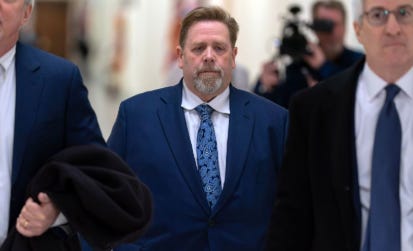
Darren Indyke arrives at Capitol Hill for his closed-door deposition, March 19, 2026. Source: AP Photo/Jose Luis Magana
He withdrew large amounts of cash from Epstein’s accounts on a regular basis. He was implicated in emails about erasing hard drives. FBI interview records show Epstein directed victims to contact Indyke if approached by law enforcement.
“That I did not know what my client did in his private life may be difficult for some to believe, but it is true.” -- Darren Indyke, prepared opening statement, March 19, 2026
Indyke’s prepared statement leaned on a version of events that has now become a pattern across every Epstein associate deposed by the committee: he led two separate lives. The professional Epstein, who required legal services. And the private Epstein, who trafficked children. Indyke insists he only knew the first one.
Democratic members of the committee were openly skeptical.
Rep. Dave Min, a California Democrat and former law professor, said after the deposition that the testimony was not credible, and raised the possibility that Indyke may have perjured himself. “I’m very surprised that he did not take the Fifth Amendment,” Min said. “I think it’s very likely he perjured himself over and over and over again.”
Rep. Jasmine Crockett described Indyke as defensive, “almost as if he still doesn’t believe Jeffrey Epstein to be who Jeffrey Epstein was.”
The Hard Drives
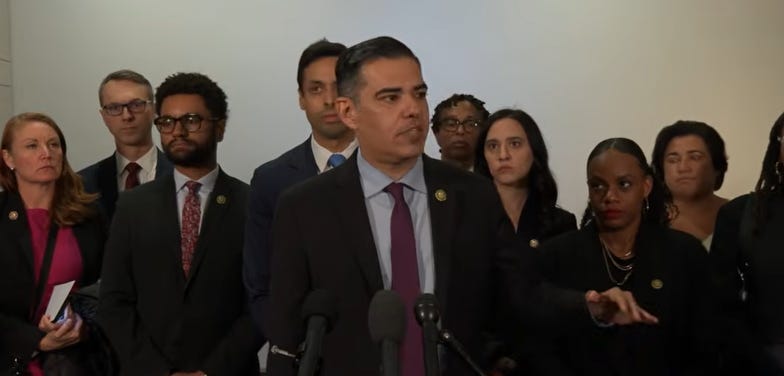
Ranking Member Robert Garcia addresses media after the deposition. He called the hard drives “of great interest” to the committee. Source: CSPAN
The most significant disclosure from the deposition came not from what Indyke denied, but from what he confirmed.
Ranking Member Robert Garcia told reporters after the deposition that Indyke had confirmed the existence of hard drives currently held by Epstein’s private investigators. The House Oversight Committee does not have these hard drives. The committee has not seen their contents.
“He confirmed the existence of hard drives held by Epstein’s private investigators. These hard drives are of great interest to our committee.” -- Rep. Robert Garcia, March 19, 2026
What those hard drives contain is unknown. That they exist, and that they remain outside the committee’s reach, is now on the record.
Indyke also indicated that he is awaiting further instructions from the Republican-controlled committee regarding a separate tranche of documents related to a lawsuit filed by Epstein survivor Virginia Giuffre. Those documents have not been produced.
Jane Doe 4
Among the most closely watched moments of the deposition was the committee’s questioning about a survivor known as Jane Doe 4, who has accused both Jeffrey Epstein and Donald Trump of abuse when she was a minor. The FBI interviewed her multiple times. Documents related to her case have been reported as first missing from the DOJ file releases, then partially restored, then missing again.
Garcia said Indyke would not confirm or deny whether the Epstein estate has reached a settlement with Jane Doe 4.
Kahn, who was deposed the week prior, was also asked about Jane Doe 4. Democratic Reps. Garcia and Ro Khanna sent a follow-up letter to Kahn’s attorney on March 13 pressing for clarification on what Kahn said in that deposition about the same accuser. Neither executor has provided a clear answer.
Never Contacted by Law Enforcement
Perhaps the most striking detail to emerge from the Indyke deposition was one that did not appear in his prepared remarks: he told the committee that he was never contacted or interviewed by any law enforcement agency, despite his close connection to both Epstein and Ghislaine Maxwell.
Documented: A source familiar with the deposition confirmed this disclosure to NewsNation. FBI interview records (302s) published in the DOJ Epstein file releases show Epstein directed victims to contact Indyke if they were approached by law enforcement. Indyke says he was never contacted by law enforcement himself.
This is not a minor discrepancy. FBI 302s in the DOJ’s released files show that Epstein told victims to call his attorney if federal agents came knocking. The attorney they were told to call was Indyke. Yet the same attorney says federal agents never came to him.
Epstein was telling victims to call his lawyer. His lawyer says no one ever called him.
Rep. Min’s observation about the structure of Indyke’s denials cuts to the heart of what the committee is confronting: if Indyke’s claims are true, then the FBI’s failure to interview Epstein’s own attorney over more than a decade of documented abuse is itself a significant institutional failure. If his claims are false, he may have committed perjury before Congress.
Either reading implicates serious institutional failure at the federal level.
The Cash
Indyke acknowledged withdrawing large sums of cash from Epstein’s accounts. His explanation: Epstein had trouble getting credit cards from major banks, required substantial cash for household staff, residences, and travel, and the withdrawals did not strike him as unusual given the scale of Epstein’s operations.
What he denied was structuring, the practice of breaking cash withdrawals into amounts below $10,000 to avoid triggering mandatory Treasury Department reporting. In 2017, Indyke had been flagged for cash transactions from Epstein’s accounts that raised federal scrutiny. He said Thursday that the withdrawals were not structured and were not intended to evade reporting.
Documented: A 2017 federal flag on cash transactions from Epstein’s accounts involving Indyke is part of the public record. No criminal charges related to structuring were ever filed against Indyke.
A 2024 class-action lawsuit filed by Epstein survivors alleged that both Indyke and Kahn helped structure Epstein’s bank accounts and cash withdrawals to give Epstein and his associates access to large sums in furtherance of sex trafficking. Indyke and Kahn agreed to settle that lawsuit earlier in 2026 for up to $35 million, with no admission of wrongdoing. A court has preliminarily approved the settlement.
The Pattern
Indyke’s deposition followed Richard Kahn’s on March 11. It followed Bill Clinton’s. It followed Les Wexner’s. It followed Ghislaine Maxwell’s, who invoked the Fifth Amendment and refused to answer questions entirely.
Committee Chair James Comer summarized the emerging pattern plainly: every witness claims they had no knowledge of Epstein’s crimes before it became public. Every one of them.
Comer noted that Indyke was cooperative and answered questions during his eight hours of testimony, which he characterized as more substantive on the Republican side, while Democrats pressed on Trump-related questions. Democrats disputed this framing.
What has not emerged from any of these depositions is a single witness willing to say, under oath, that they saw something and said nothing. Every person close to Epstein, whether they handled his money, his legal affairs, or his social calendar, says they saw nothing at all.
The Epstein Victims’ Compensation Program, administered by Indyke and Kahn as estate co-executors, has paid out more than $121 million to 136 survivors, according to Indyke’s own testimony. More than 136 people experienced abuse serious enough to qualify for compensation. The two men who managed Epstein’s legal and financial infrastructure say they never noticed a thing.
What Comes Next
Democrats on the committee have signaled they are not done with either executor. Garcia said the committee remains eager to secure the hard drives held by Epstein’s private investigators. Democrats are also pushing for further document releases from the estate.
A subpoena for Attorney General Pam Bondi is still in play. Bondi met with committee members on March 18, one day before the Indyke deposition, but Democrats walked out after she refused to commit to testifying under oath on April 14.
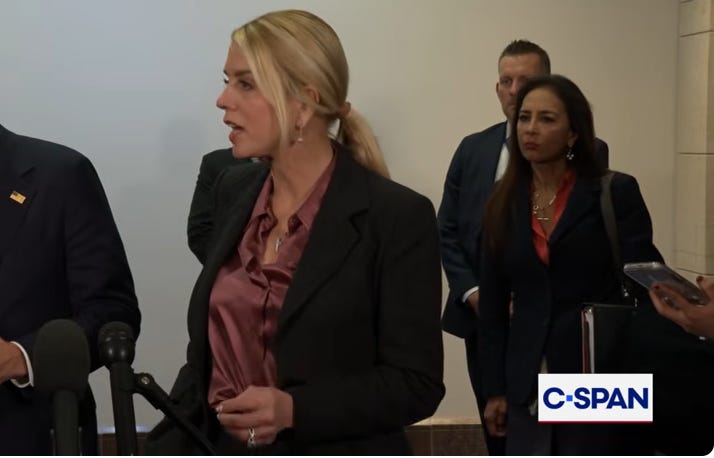
Attorney General Bondi speaks to reporters after Democratic lawmakers walked out of a closed-door briefing on the Epstein Investigation. She says she will "follow the law" but does not say she would follow the subpoena to testify under oath.
Ghislaine Maxwell, who has already appeared virtually and invoked the Fifth, remains a figure of significant interest.
The deposition transcript has not been publicly released.
Last Page First is an independent investigative publication. Paid subscribers make the deep dives possible—FOIA templates, citation indexes, Document Room access, and subscriber discussion threads. If this piece reached you, share it. If you want to help keep it going, subscribe.
If you have documents, names, or anything relevant to an investigation, my inbox is open to everyone. Contact us here. Your name stays private unless you tell me otherwise.
Sources
NPR -- ‘Epstein’s Former Attorney Testifies He Had No Knowledge Whatsoever of Crimes,’ March 20, 2026
CBS News -- ‘Darren Indyke, Epstein’s Lawyer, Tells House Panel He Had No Knowledge Whatsoever of Crimes,’ March 19, 2026
CNN Politics -- ‘Darren Indyke, Epstein Attorney, Denies Knowledge of Financier’s Sexual Abuse,’ March 19, 2026
ABC News -- ‘Epstein’s Longtime Lawyer Claims No Knowledge Whatsoever of Sex Trafficking in Deposition,’ March 19, 2026
NewsNation -- ‘Jeffrey Epstein Co-Executors Darren Indyke, Richard Kahn Questioned About Jane Doe 4,’ March 20, 2026
Washington Examiner -- ‘House Oversight Committee Interviews Former Epstein Lawyer Darren Indyke,’ March 19, 2026
House Oversight Committee Ranking Member Robert Garcia Statement, March 19, 2026
MS NOW -- ‘As Epstein’s Longtime Lawyer Testifies, Questions Remain About What He Knew,’ March 19, 2026
DOJ Epstein Files Transparency Act (EFTA) document releases, 2025-2026
U.S. Virgin Islands AG v. Jeffrey Epstein Estate, settled 2022
Epstein victim class-action lawsuit v. Indyke and Kahn, settled 2026 (up to $35M)