
The New Loyalty Test
How Bill C-9 is redrawing the line between dissent and disloyalty — and why “antisemitism” has become the hammer that makes everything look like a nail.

Alright. Here we are again.
If you’re just tuning in, you know the drill. This is the last page. The one you flip to when you’re done with the headlines, the hot takes, the carefully worded statements from people who have never had to make a decision that cost them anything. This is the place where we talk about what’s actually happening. Or try to. Because lately, trying to even name what’s happening is starting to feel like a trap.
Bill C-9
I’ve been watching this thing — Bill C-9 — worm its way through the news cycle. Or rather, I’ve been watching it not go through the news cycle. It’s one of those pieces of legislation that gets a paragraph on page twelve, a few angry tweets, and then disappears into the fog of “well, if you’re not doing anything wrong, you have nothing to worry about.”
And that’s the line. That’s always the line, isn’t it?
For those who haven’t been following it like a hawk on a fence post: Bill C-9 is ostensibly about combatting foreign interference. Sounds noble. Sounds like something a country should do. It gives the government new powers to go after foreign agents, to protect our institutions. And on its face, who’s going to argue with that? Nobody. That’s the point.
But here’s where it gets sticky. Here’s where you have to put your coffee down and actually read the thing.
The bill doesn’t just go after foreign agents. It creates a new mechanism to target “foreign influence” more broadly. And in the language of the law, in the way it’s being interpreted by the people who will be wielding it, “foreign influence” is starting to look an awful lot like “any organized domestic opposition to the government’s foreign policy.”
You see where this is going.
We’re living in a moment where the word “war” is being thrown around like confetti. We’re in a “war” on misinformation. A “war” on foreign interference. A “war” on antisemitism. And look—I’m not here to say those aren’t real things. They are. Antisemitism is a poison that has no place in any society. Foreign interference is a real threat. But when you declare a war on abstract concepts, you get to define who the enemy is. And once you define the enemy, you get to use the tools of war.

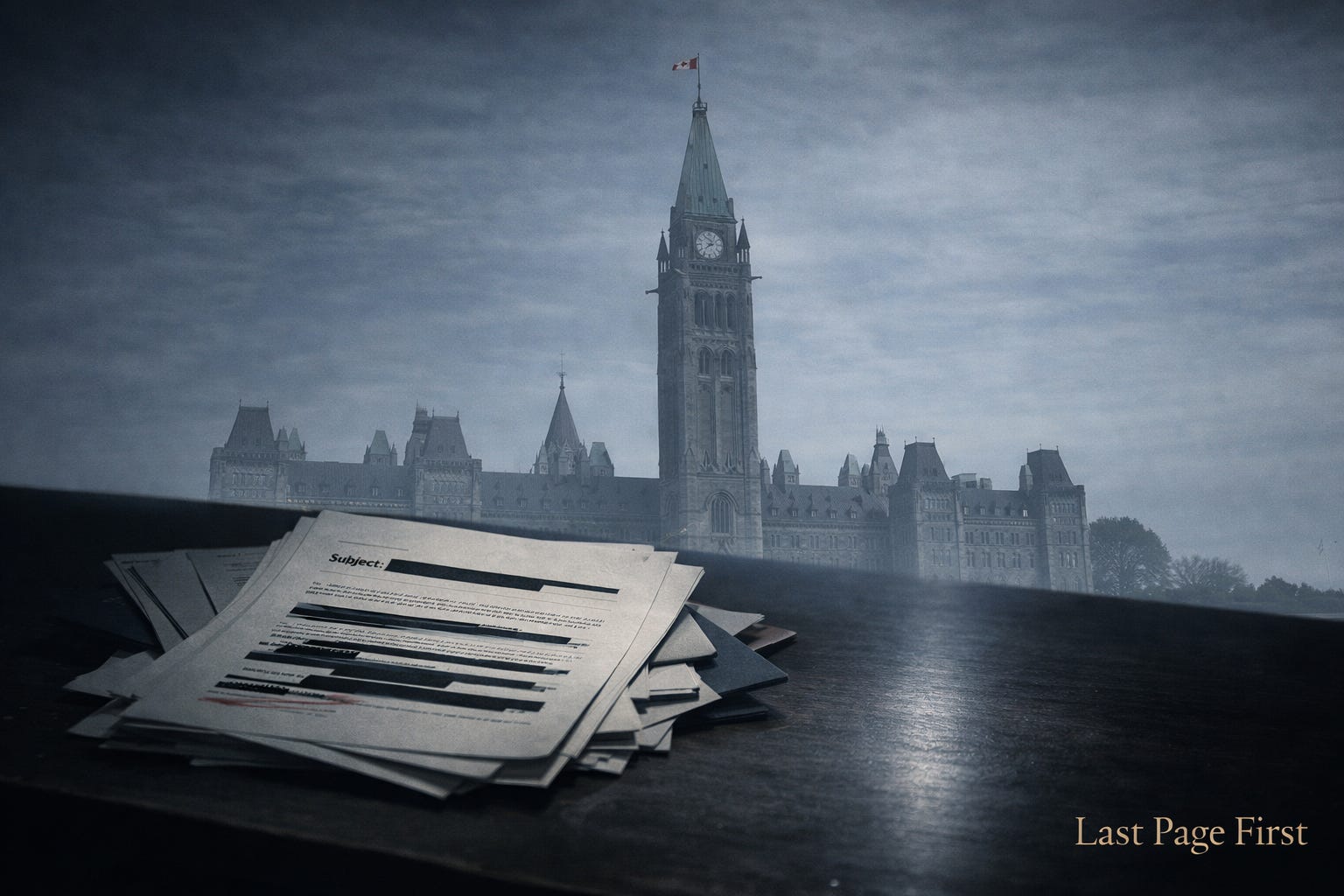
Parliament building of Canada Ottawa Source: Marc-Lautenbacher
The Tools Of War Are Not Gentle
What’s happening right now — and I’m saying this slowly because I want it to land — is that the framework of “antisemitism” is being stretched to cover any criticism of the state of Israel’s military actions. And not just the fringe stuff. Not just the bad-faith stuff. Legitimate criticism. The kind of criticism that gets leveled at any country conducting a war with a civilian casualty count in the tens of thousands.
If you stand up in a public square in this country and say “I don’t think my tax dollars should be funding that,” you are now at risk of being labeled a purveyor of hate. And if Bill C-9 passes in its current form — or in the form it’s trending toward — you might not just be labeled. You might be investigated. You might find yourself on a list. You might find that your organizing, your speaking, your simple act of showing up to a rally, gets reclassified as “foreign interference” if the government decides the rhetoric you’re using aligns with the talking points of, say, Iran or Russia.
Do you see the circle they’re squaring here?
They don’t have to prove you’re an agent. They just have to prove you’re useful to a foreign power. And if you’re out there saying “stop the bombs,” and a foreign power is also saying “stop the bombs,” well — congratulations. You’re now a vector of foreign influence. You’re a threat to national security.
This is not a conspiracy theory. This is the architecture of the law. This is how the Overton window gets welded shut.
I keep thinking about what “war” means in this context. We’re not in a war in the traditional sense. We’re in a cold war of narrative. And in a cold war, the enemy is inside. It’s the person who reads the wrong Substack. It’s the person who signs the wrong petition. It’s the person who shows up to a protest with a sign that the nightly news has decided is “controversial.”
The Quiet Part
The conflation of antisemitism with anti-Zionism is a deliberate political strategy. It’s a way to foreclose debate. It’s a way to say “if you oppose this policy, you are not just wrong — you are evil, and you are a threat to the safety of Jewish people.” And that’s a heavy thing to lay on someone. It’s meant to be. It’s meant to shut you up before you even open your mouth.
I’ve got friends — Jewish friends, people whose families carry the weight of the Holocaust in their bones — who are terrified of what’s being done in the name of their safety. They’ll tell you: using antisemitism as a cudgel to silence dissent doesn’t protect Jewish people. It cheapens the word. It makes it harder to fight the real thing when it shows up. And it’s showing up. It always shows up when the state starts drawing these lines.
So where is C-9 at right now? It’s in the machine. It’s being debated in committees. It’s being quietly massaged, the language tweaked to make it sound more palatable. But the skeleton is still there. The skeleton says: we can designate you as a threat if your political speech aligns with what we deem to be foreign objectives. And in a world where the government controls the definition of “foreign objectives,” that’s not a law. That’s a leash.
I’m writing this on the last page — first — because it doesn’t belong on the front page. The front page is for press releases and official statements. The front page is for the government to say “this bill is about protecting democracy.” The back page is for us to say “yeah, but who’s defining democracy? And who gets to be protected?”
We’ve been here before. Not in Canada, maybe, not exactly. But in the long arc of history, this is a familiar place. It’s the place where the state expands its power in the name of safety. It’s the place where words like “hate” and “extremism” get stretched until they snap. It’s the place where the people who ask questions are told they’re part of the problem.
I don’t have a neat ending for this. I don’t have a call to action that’s going to fix it. All I have is this page, and the fact that you’re still reading it. That’s something. That’s not nothing.
Keep asking the questions. Keep reading the bills. Keep showing up for your people, whatever that looks like. And don’t let anyone tell you that dissent is the same thing as disloyalty.
They want you to believe that. Because if you believe that, you’ve already surrendered.
We’ll talk again soon.
Last Page First is an independent investigative publication. Paid subscribers make the deep dives possible—FOIA templates, citation indexes, Document Room access, and subscriber discussion threads. If this piece reached you, share it. If you want to help keep it going, subscribe.
If you have documents, names, or anything relevant to an investigation, my inbox is open to everyone. Contact us here. Your name stays private unless you tell me otherwise.
SOURCES
[1] Parliament of Canada, Bill C-9: An Act Respecting Countering Foreign Interference, 44th Parliament, 1st Session, introduced February 2026.
[2] Michael Spratt, “The Chilling Effects of Bill C-9 on Political Speech,” The Globe and Mail, April 2026; analysis by the Canadian Civil Liberties Association, “Brief on Bill C-9,” March 2026.
[3] Office of the United Nations High Commissioner for Human Rights, “Gaza Casualty Figures: Updated Analysis,” March 2026; Amnesty International, “Canada’s Arms Exports and International Law,” February 2026.
[4] Canadian Security Intelligence Service (CSIS), Public Report 2025, tabled in Parliament, December 2025; University of Ottawa Human Rights Research Centre, “Legislating Dissent: A Critical Review of Bill C-9,” April 2026.
[5] Justin Ling, “The Foreign Interference Bill Nobody’s Talking About,” The Walrus, March 2026; PressProgress, “Bill C-9: What You Need to Know,” February 2026.
[6] Independent Jewish Voices Canada, “Position Statement on Bill C-9 and the Weaponization of Antisemitism,” January 2026; Peter Beinart, “The Antisemitism Awareness Act Is a Trap,” The Guardian, May 2024 (contextual precedent cited in Canadian parliamentary testimony, February 2026).
[7] Na’ama Riba, “Canadian Jews on the Front Lines of Free Speech,” Haaretz, March 2026; Canadian Civil Liberties Association, “Protecting Civil Liberties in the Age of Foreign Interference,” April 2026.
[8] House of Commons Standing Committee on Public Safety and National Security, Evidence: Bill C-9 Study, March–April 2026 (multiple sessions); Aaron Wherry, “The Uncomfortable Questions at the Heart of Bill C-9,” CBC News, April 10, 2026.
[9] Timothy Snyder, On Tyranny (2017), cited in testimony before the Standing Committee on Public Safety, March 2026; Globe and Mail editorial board, “The Danger of Overreach in Bill C-9,” April 5, 2026.